Showing posts with label mosaic knitting. Show all posts

Wednesday, February 25, 2026

The Shift


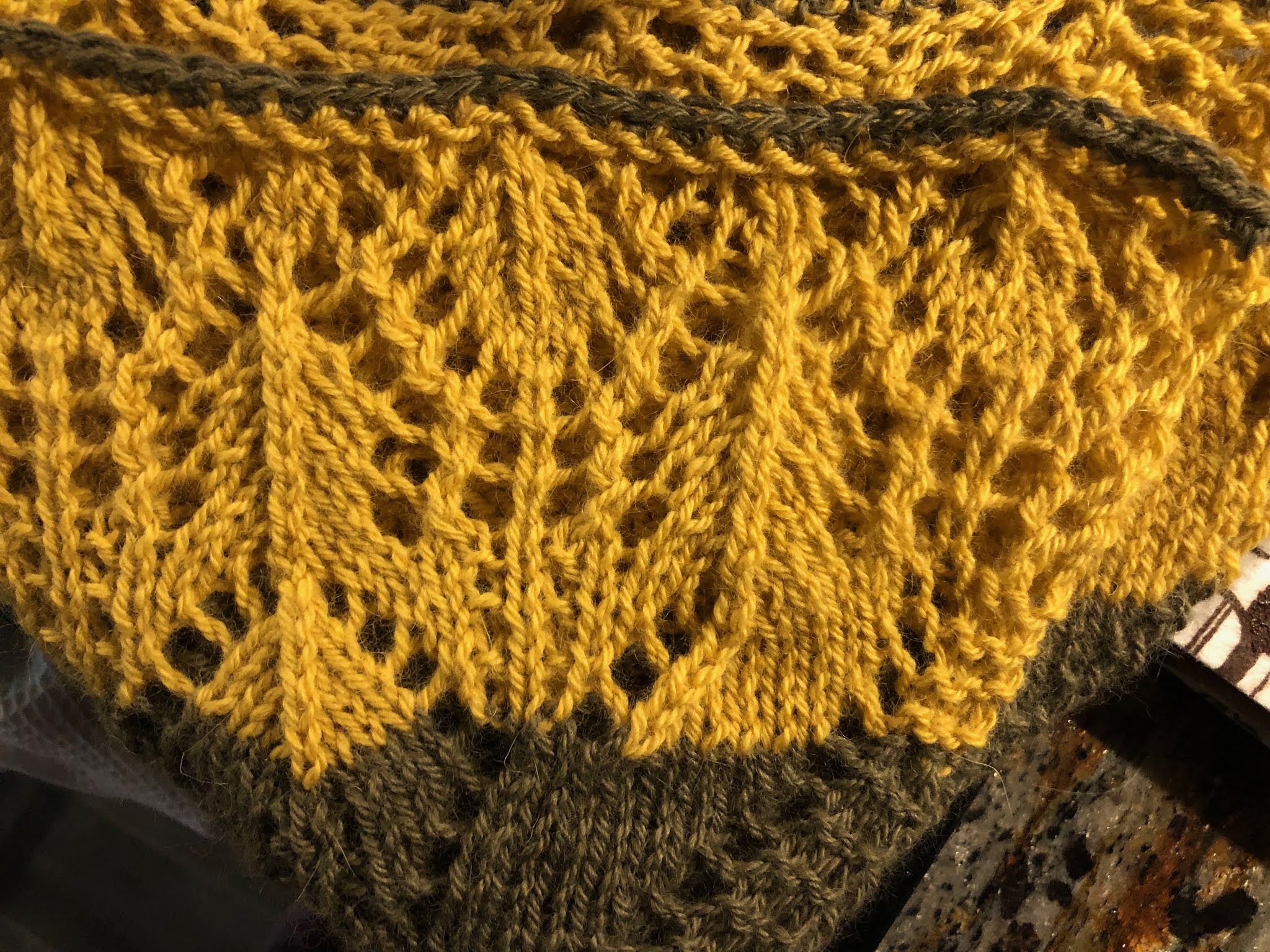
I love the shifts in color.  Working on the black cherry at present.

I was having a deeply reflective conversation with my therapist about the profound shifts occurring in my life lately. I find myself entrusting my journey to the Universe, and while that may seem a bit esoteric to some, it resonates deeply with me. 


There’s a natural rhythm to the way things align, like two cogs harmoniously engaging with one another. The steps I take are like building blocks of a staircase leading me to new heights. With this belief that the Universe is conspiring in my favor, I experience an incredible sense of freedom and inner peace. 


It’s not just the major life changes that reveal this truth. Every challenge we face can either ignite solutions or trigger reactions. By consciously choosing to focus on what I can create from my experiences rather than dwelling on external circumstances, I allow genuine transformation to unfold.


For example, I found myself engaged in the delicate dance of "yarn chicken," where I gambled on finishing a project with the yarn supply I had. As I lay in bed, a calm clarity washed over me, illuminating the realization that I had a beautiful leftover ball of fingering-weight yellow yarn waiting for me—a gift from the Universe itself. 


The next morning, joy flooded my heart as I discovered it was indeed the perfect match in weight and color to complete my mosaic stitch repeat. Yet, the Universe had more lessons in store. When I encountered another situation where I played yarn chicken and fell short, I still felt a deep-seated trust. I knew there was another ball of yarn, waiting patiently, ready to fulfill my need and complete the design. And, just as I had anticipated, it was right there for me.


These moments remind me that, like the threads of yarn weaving together in a tapestry, our lives unfold in divine patterns, guided by an unseen hand. The more I surrender to this flow, the more magic and connection I experience in every aspect of my life.


Happy Crafting! ๐Ÿงถ 


Bright Blessings,


Ruinwen

Thursday, February 19, 2026

Connecting With Generosity

With the two little tops completed, I find myself once again immersed in one of Kathy's cherished projects. She began weaving a blanket adorned with delicate pink and white hearts—a perfect reflection of this season, where love blooms and Valentine's Day fills the air with warmth and connection. It seems only fitting to work on something that embodies a Mother’s heart, representing love, healing, and nurturing.

My own journey of the heart has taken me through a labyrinth of healing over many years, seeking a sense of worthiness and inner peace. I’ve consciously released the burdens I once clung to, recognizing that they were untruths that only served to hinder my spirit. In this process, I have reframed the distortions of past experiences that became false narratives—wounds that carved deeply into me.

In a recent moment of reflection, I chose to honor my efforts by rewarding myself for overcoming challenges. For so long, I struggled with receiving. I often felt like a burden to others—a thought that weighed heavily on my heart. When a dear friend happily offered to help me untangle some embroidery thread, I found myself questioning, “Why would I put her through this?”

But then, a profound insight came my way: “The Universe is not stingy. We are. Some of us compel ourselves to hold tightly, not just in how we treat others but fundamentally in how we treat ourselves.” It struck me like a gentle whisper of the Spirit, urging me to open my clenched hands, heart, and mind.

That night, as I penned a mindful journal entry, the essence of my reflections blossomed: “Being open to mutual generosity cultivates deeper connections and reinforces the bonds we share. Embracing the kindness of others enriches the fabric of our relationships, allowing both sides to flourish in the abundance of giving and receiving.”

This revelation illuminated a corner of my mind that I had never considered before. I found joy in extending help to others—but I had failed to recognize that they too experience joy when offering assistance to me. The community I hold dear in my heart somehow felt exclusive of me, an ironic twist that only fueled my internal struggle. Those two messages resonated deeply within me, igniting a spark of transformation.

As the dawn broke, I embraced a new perspective. I began accepting help with grace when it was offered and learned to ask for assistance without the nagging fear of being a bother. It’s not an easy path, and while I’m not an expert, I continue to strive for growth.

The most challenging aspect has been prioritizing myself—understanding that nurturing my joy is as sacred as guiding others on their journeys. My “me time” has evolved from a mere pause into a sacred ritual filled with joy and curiosity. The rewards I give to myself are treasures: a long spiritual bath illuminated by flickering candles and fragrant incense; snuggling up with a book whose pages have yearned for my touch; each reward weaving deeper meaning into my journey.

Pattern:  Quintet Shawlette and Yarn:  Anzula Squishy Skiens, Autumn Leaves

My latest gift to myself is working with yarn lovingly provided by my daughter, who saw it and felt it resonated with my essence. Its softness feels divine in my hands. I’ve discovered a perfect pattern for mini skeins and eagerly anticipate the dance of color changes. The mosaic stitch feels like a joyful meditation, a creative expression that encourages exploration without full commitment, unlike traditional Fair Isle, where both yarns must be carried across.

Through each stitch and each act of self-love, I weave not only a blanket but a tapestry of transformation, a testament to embracing not just the heart of a mother but the sacred love of the universe that flows abundantly when we open ourselves to it.

Happy Crafting ๐Ÿงถ 

Bright Blessings!

Ruinwen


Friday, February 11, 2022

Creating Connections


This is a picture of Mom, the Goddess Brigid, and this amazing yarn from knittinbro.  This was the seed idea that started everything.

I was inspired by the needlepoint pillows that Mom made that adorned our house.  I wish I had one to show you.  I'm not sure what happened to them.  But they were beautiful.


I thought mosaic knitting would be a good fit for this idea that was gelling in my brain.


Mosaic knitting is a term coined by Barbara Walker. In Barbara Walker's A Treasury of Knitting Patterns first published in 1968.


In mosaic knitting, you work the same row twice.  Usually, only two colors are worked, but some patterns have more.  One color is knit or purled and the other color is slipped.


This makes this a great alternative to other colorwork where two colors or more are worked across the row at the same time.


Rules (and I use that word loosely) for Mosaic Straight Knitting

  • usually, two (sometimes more) colors are used on a row
  • only one of these colors is worked on a row while the other stitches are slipped
  • each row is worked twice
  • every two rows the color will change to the one(s) not being used
  • odd rows are right side knit rows / even rows are wrong side purl rows
  • slip stitches are worked purlwise with the yarn on the wrong side 
  • don’t have too many slips next to each other (some say 2 slips, others say 3 at most)
  • keep floats loose
  • it is recommended that you go down a needle size from the number on the ball band to get tight, even stitches.  (this depends on how tightly you knit though)
Sample Chart


This chart assumes that the MC is being carried from the brim or crown, otherwise, it wouldn't be there to slip.


The bar on the side by the row numbers is to signify which color is being worked for those two rows; the other color is slipped.


I have also indicated the slips with a symbol to make it easier to see the structure.  I have chosen to chart this way but you will see mosaic knitting charted in different ways depending on the designer.


I have written out the rows but not all designers will do this so it is helpful to learn to read a chart.


Row 1 MC:      (sl1 MC, K3 CC) twice, sl1 MC

Row 2 MC:      (sl1 MC, P3 CC) twice, sl1 MC

Row 3 CC:       K2 MC, sl1 CC, K3 MC, sl1 CC, K2 MC

Row 4 CC:       P2 MC, sl1 CC, P3 MC, sl1 CC, P2 MC


Repeat Rows 1 - 4 once more


Repeat Rows 1 - 2 once more


I have been working on a motif that looks like this.


Neighborhood Fiber Co: Studio Worsted 
Canton and Cooper Circle


Unfortunately, this won’t work with the hat schematics that I have been working on because it takes up too much band real estate.  But it will happen as a cowl or something in the future because I just love it too much!


I also have to note that I love this yarn combo more than I can express.  I have a bit left from a pattern submission and I use it when I need a bit of inspiration.  Neighborhood Fiber Co. is amazing.    They still have these beautiful colors and I need to buy more.  ๐Ÿ˜€


I also tried to break the rules and switch colors every row, but the result ended up losing definition and the motif was lost. 


One of the things I love about this swatch is the feeling of depth between the spice and the blue and that keeps getting lost.


swatch with Latvian Braid detail

I created this swatch but it lost all the connectedness and all the things that I liked about the original.  I did love the Latvian braid idea though and I am keeping that.


Charting mosaic knitting is challenging because the color that you are slipping has to be there on the previous row.  This is why you see geometric patterns represented a lot.


I have been struggling with this for a while now.  I have all this beautiful yarn and I haven’t been able to play with it.  ๐Ÿ˜ฉ


I don’t just make a pattern to do it.  There has to be a story, a reason that sparked my creativity as my seed for the pattern.


Usually, I have sketched or written up an idea so I have this “ideal” in my head that goes with my story.


This hat is dedicated to my beloved Mom and I want it to have this “connectedness” that my original sample had but this last one didn’t.


this one connects the brim and the crown


When we were looking at the next incarnation of my chart my sister suggested putting joining paths on the right and left of the design to add that "connectedness" that I was missing.  I added the top and bottom connections that actually bridge the brim and crown and make them a part of the design.


I feel that these connections that have been added only add to the story that I am creating.  Mom, sis, and I will be a part of this design and I love that.  ๐Ÿ’–


I also feel I've gotten the needlepoint look back that I was seeking and I think I am ready now to swatch in the fabulous knittinbro yarn to figure out measurements.


Then, my friends, it will be time to actually knit this hat!  ๐Ÿ˜


Happy crafting!
Ruinwen ๐Ÿค—

**************************
Safe socially-distanced hugs  ๐Ÿค—
**************************
Sending love and light to everyone being affected by this virus.  
May you be safe.  
May your loved ones be safe.  
๐Ÿ™
**************************
Sending love and light to everyone facing discrimination, hate, prejudice, inequality, or racism.
๐Ÿ™๐Ÿ™๐Ÿ’–๐Ÿ’–๐Ÿ™๐Ÿ™
**************************
Vixenpath is a safe space.
If you are:
LGBTQ+
Black
Brown
Asian
Any race
Coming out
Anything.

I am a safe person and I will always hold space for you in love and light.
Ruinwen
๐Ÿค—


Friday, February 19, 2021

A Day of Slipping

This week we got a bunch of ice and things are quite dangerous around here today.  We needed to clean up stuff enough for our local farm delivery tomorrow and it was super slippery out there.  

Right now it is still sleeting or as my phone's weather app calls it, ice pellets.  Ice pellets sting a bit after being pelted with them for a while.

After my son and I tackled the driveway, I am back inside.

We have been talking with a gaming friend in Texas who only gets 45 minutes of power every hour and a half.  

Our prayers go out to all the people without power and or water across the globe.  ๐Ÿ™ 

Did you know it is snowing in Athens, Greece?

*************

So what do you do on an icy day...knit of course.  lol

I was thinking about what I would write about this week as I was shoveling.  The ice if nothing else, is very soothing as it falls.  But I had to be very careful not to slip.

And then it came to me...slipping.

Slipping is something that we do all the time in knitting and it is totally safer than ice.  ๐Ÿ˜€

Stitches can be slipped knitwise or purlwise with different results.

Usually, a pattern will denote which way to slip but if it doesn't you can usually sus out which way to slip.

Terminology

WYIF / WYIB

It is important to note that the working yarn placement is also very important to how a slip stitch is worked.

The yarn will either be WYIF - with the working yarn in the front or WYIB - with the working yarn in the back 

Some patterns carry the yarn across the front when slipping to create a different sort of motif.

Gulls and Garter

As you can see from the Gulls and Garter stitch pattern that the yarn has been carried across the front of the work to create this interesting motif.

Purlwise

Stitches slipped purlwise or tip-to-tip do not change at all.  The front leg is still on the right-hand side of the stitch as normal stitch mounting dictates.

This is usually what is meant by sl 1.

To slip purlwise you insert the right-hand needle into the stitch on the left-hand needle as if to purl.  Your working yarn can be in the front or the back of your work as the pattern dictates.  The stitch is moved to the right-hand needle without working it.

Purlwise slipping is usually used in stitch patterns that will be worked in the next row.

Knitwise

Stitches slipped knitwise are changed.  The front leg is now on the left-hand side of the stitch and the stitch is twisted.

Knitwise slipping is used in some stitch decreases such as the SSK (slip, slip, knit) or the SKP (slip, knit, pass the slipped stitch over [PSSO]).  

These two examples are left-slanting decreases.

To slip knitwise you insert the right-hand needle into the stitch on the left-hand needle as if to knit.  Your working yarn is in the back for the above-mentioned examples.  The stitch is moved to the right-hand needle without working it.

Knitwise slipping is usually used in stitch patterns that will be worked on the same row that they are slipped on.

CDD / CDDP
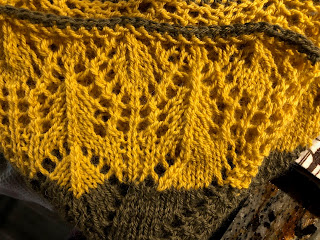
the vertical lines going through the lace
are using the CDD decrease


In the case of a CDD or central double decrease, two stitches are slipped knitwise at the same time WYIB.  This decrease as well as its sister decrease, the CDDP, does not slant in either direction and is vertically centered through the three stitches.

These stitches also go by S2KP2 and *SSPP2

* Note the Craft Yarn Council has a different version of how to do this stitch than I use, but recently when I submitted a pattern it seemed that this stitch had been revised to be more of an S2PP2, though this is my abbreviation for the process and is not used anywhere else.  It seems that CDD and CDDP are considered the "terminology" used for these two stitches more often than not.

My two cents: from swatching the two versions SSPP2 and S2PP2 seem to pretty much end up with the same result.

CDD - sl2 stitches together knitwise, K1, pass the 2 slipped stitches over


In a CDDP or central double decrease purl, two stitches are slipped through the back loops purlwise at the same time WYIF.


TBL


To knit through the back loop (tbl) you insert the right-hand needle through the back of a stitch on the left-hand needle from right to left.


A purlwise version (p tbl) is achieved by inserting the right-hand needle through the back of the stitch on the left-hand needle from left to right. It is a bit tricky at first to get the hang of IMHO.


CDDP - sl 2 stitches together purlwise tbl, P1, pass the 2 slipped stitches over

Some Slip Stitch Patterns

Linen Stitch

linen stitch

Linen stitch uses slipped stitches to make a woven pattern.  The stitches in linen stitch are slipped purlwise with the yarn in different positions.  The wraps create the woven type fabric.

The pattern for one color linen stitch is as follows (I included a slip stitch edge in the pattern):

Row 1: sl 1 WYIB, K1, *sl 1 WYIF, K1* repeat ** until the end

Row 2: sl 1 WYIF,  P1, *sl 1 WYIB, P1* repeat ** until the end

Brioche

here is an example of one and two-color brioche

Brioche is a two-sided squishy fabric that uses slipped stitches, yarn overs, and a bunch of other specially named stitches.  You can read about brioche in this past post.

Mosaic Knitting


this sweater uses slipped stitches to create a motif of cats

Mosaic knitting is knitting with two or more colors to create a motif.  Mosaic knitting often uses high contrast colors to make the design really shine. 


Mosaic knitting provides a nice foray into colorwork as you only knit with one color at a time while slipping the other color.  Each color is used for two rows.


All rows are slipped purlwise.  The knit rows are slipped WYIB, the purl rows are slipped WYIF. The purl row will mirror the knit row in yarn color placement.


Most mosaic patterns are worked from charts.  

Slip Stitch Edging

A slip stitch edge can really change the way your finished item looks and it is super simple.

Here are two ways to work a slip stitch edge:

Slipping Every Row

In this method, you slip the first stitch of every row purlwise but the working yarn is either held in the front or the back depending on the fabric you are creating.

If you are using a knit garter stitch edge where every stitch is knit, you would sl 1, WYIF.

If you are using a purl garter stitch edge where every stitch is purled, you would sl 1 WYIB.

If you have a stockinette stitch edge where the first row is knit and the second is purled, you would work the knit side, sl 1 WYIB, and then the purl side sl 1, WYIF.

If you have a reverse stockinette stitch edge where the first row is purled and the second is knit, you would work the purl side, sl 1 WYIF, and then the knit side sl 1 WYIB. 

I like this method because it is easy to remember to slip each row.  It does sometimes get confusing remembering where the working yarn is since it changes row to row.

Slipping Two Stitches Every Other Row

In this method, you slip the first and last stitch of every row purlwise but the working yarn can be held in the front or the back depending on the fabric you are creating.  On the second row, you will not slip any stitches.

If you are using a knit garter stitch edge where every stitch is knit, you would slip the first and last stitches WYIF.

If you are using a purl garter stitch edge where every stitch is purled, you would slip the first and last stitches WYIB.

If you have a stockinette stitch edge where the first row is knit and the second is purled then you would slip the first and last stitches WYIB.

If you have a reverse stockinette stitch edge where the first row is purled and the second is knit then you would slip the first and last stitches WYIF.

I like this method because you have one side that you are slipping on and you can mark it with a locking stitch marker or piece of string to act as a reminder.  Also, the working yarn will be in the same position so it is easy to keep track of.

What Happens When the Slipping Slips Up? (say that 10 times fast)

Mistakes happen to everyone.  The first thing I always tell students is to breathe, then put their work down, and finally make a plan for recovery.

That horizontal bar three stitches down is a mistake

You could be blissfully knitting away and when you get to your edge it looks like this.  Somewhere you should have slipped and didn't or slipped in the wrong direction but that is okay.

The thing about this edge is that it is mostly separate from your work and is easy to fix.

So let's make a recovery plan.

You want to start by removing the last stitch off of the needle.  Let it drop and take out the working yarn, it is not going anywhere.

the three unraveled edging slip stitches

Now your slipped stitches are free to work with.  Unravel each carefully even though they are not going anywhere.

Each stitch is inside the last.  Pull out each stitch until you have undone the mis-slipped stitch.

Then re-ladder then up with a crochet hook.  If you never have done that - here - is a post on re-laddering.

Put the resulting loop on your left-hand needle and rework it.

Ta-da!  

Happy Slipping!

****************************

If you have any questions or comments on this or any of my other tutorials, please leave me a comment.

****************************

Safe socially-distanced hugs  ๐Ÿค—


****************************
Sending love and light to everyone being affected by this virus.  

May you be safe.  

May your loved ones be safe.  

๐Ÿ™

***************************

Sending love and light to everyone facing discrimination, hate, prejudice, inequality, or racism.
๐Ÿ™๐Ÿ™๐Ÿ’–๐Ÿ’–๐Ÿ™๐Ÿ™